



Why Cabling Continues to Determine the Success of a Project
)
When designing audiovisual systems, the conversation usually centers on displays, audio systems, control, or software. However, there is one element that rarely takes center stage in these discussions but ultimately defines the final result: the connectivity infrastructure.
Cabling—along with connectors and terminations—is the foundation on which the entire system operates. And while it isn't always visible to the user, it has a direct impact on the quality, stability, and lifespan of any AV project.
What you can't see… but can feel
A system may have the best equipment on the market, but if the signal isn't transmitted properly, the result is compromised.
Signal loss, interference, noise, or intermittent failures are often caused by decisions made at the most basic level of the system.
This is especially critical in environments where reliability is non-negotiable, such as control rooms, corporate spaces, educational settings, or live events.
“We live in a region rich in nuances and colors, where environmental conditions can be quite challenging. We’ve been fortunate to work on projects ranging from the sweltering heat of La Paz, Baja California—where temperatures exceed 40 degrees—to the humid and rainy mountains of Chiapas. That’s why we always make sure to thoroughly understand each project and the specific climatic conditions of the installation site,” explained Raúl Tirado, CEO of Solcor Audio.
“Our goal is to provide long-term solutions for our customers, ensuring that the cabling they choose is the right fit and can withstand the elements. We want our customers to feel confident that their installation and work will not be compromised, backed by cabling that will serve as the backbone of their project.”
The complete system
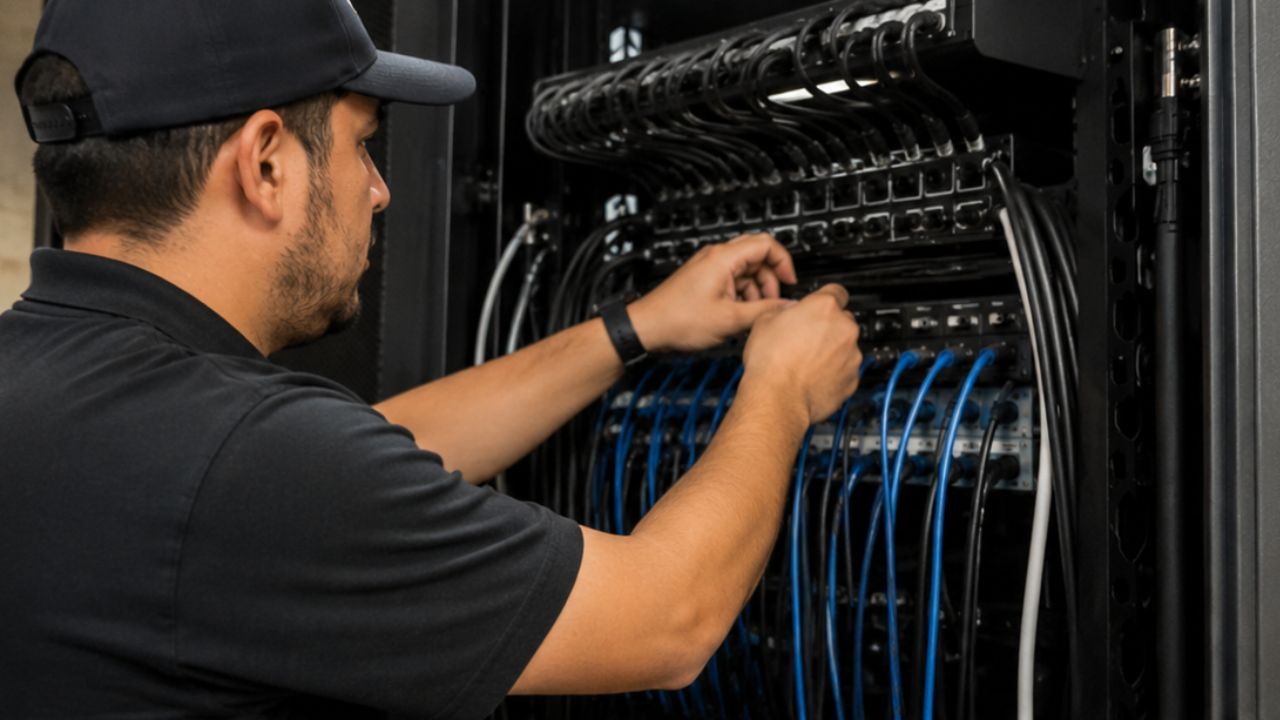
Talking about cabling isn't just about cables. It involves understanding how different elements interact: connectors, routing, distances, interference, signal type, and environmental conditions. Every decision affects signal integrity.
Furthermore, designing for a permanent installation is not the same as designing for a temporary or mobile solution. The requirements change, and with them, the selection criteria.
“First, you have to consider the location. Will it be an enclosed environment, a fixed installation that will remain within the premises, or a portable installation? It’s always crucial to know not only the external spaces but also the spaces designated for the connection. You also have to consider the diameter of the chassis intended for the connectors, where the cabling will run, and whether there is any equipment emitting RF nearby. All these factors are essential for determining the cable gauge, the protective shielding, and the connector dimensions,” said Raúl.
“Unfortunately, installers often overlook these details because of the sheer volume of information they have to process. As a result, surprises arise during installation. It’s important to recognize that wiring is a necessary component that goes hand in hand with everything else in an installation and is just as important as any other aspect,” he added.
Common mistakes that affect performance
In many projects, the connectivity infrastructure is defined at the end of the process, when the design is already well underway.
This often leads to hasty decisions or solutions that were not designed with the actual conditions of use in mind.
Some of the most common problems include:
- Incorrect cable type selected
- Connectors not suitable for the application
- Installations without considering interference
- Lack of planning regarding routes or distances
The results aren't always immediate, but they usually become apparent over time.
The CEO of Solcor Audio emphasized: “Mexican engineers have the experience, savvy, and ingenuity needed to solve problems. That’s why we feel there’s been an increase in large-scale events in our country. However, we’ve run into a recurring problem: although the knowledge exists, effective communication of requirements often falls short. Factors such as the required bandwidth, the electrical grid architecture, and the available space for cabling are critical. If these aren’t effectively shared, we fall into the trap of making assumptions. As is often said, cabling must be integrated from the very beginning, since it serves as the veins through which all information flows.”
Designing from the ground up
Incorporating infrastructure from the earliest stages of design allows for decisions that are more consistent with the project's objectives.
This not only improves technical performance, but also reduces risks and makes maintenance easier.
In a context where systems are becoming increasingly complex, the foundation on which they operate becomes even more important.
A strategic decision
Wiring should not be viewed as a secondary component. It is a fundamental part of the system.
And in many cases, that’s what determines whether a project works as intended… or not.
Solcor Audio will be attending InfoComm América Latina to continue discussing this topic and show you the latest solutions in the world of cables. Stop by and visit them at booth M329! Registration opens very soon…