


Multi-Zone Audio Design in Fitness Facilities: The Luxor Case Study
)
Unlike other commercial environments, multiple acoustic dynamics coexist here simultaneously: high sound pressure, continuous music, amplified speech, variable reverberation, and constant changes in the audience.
The project carried out at Luxor Fitness Center is a good example of how to technically address these challenges using a networked audio architecture.
Luxor Fitness Center is located in the prestigious Luxor Tower in Las Mercedes, in the city of Caracas, Venezuela, and offers spaces for activities ranging from ballet, martial arts, spinning, Pilates, and cardio to weight training.
1. True zoning, not just physical division
One of the most common mistakes in gyms is assuming that separating spaces with walls is enough to isolate the sound. In practice, each room has:
- Different contour lines (different target SPL in spinning vs. Pilates).
- Variable speech intelligibility requirements.
- Usage patterns that change throughout the day.
In this case, the integrator AVCOM Venezuela designed a system with eight independent zones, each with dedicated volume and source controls. This allowed for dynamic adjustments based on class type, operational isolation between spaces, and a reduction in cross-sound interference.
For system integrators, the lesson is clear: zoning should be approached from the perspective of the signal matrix, not the building's architecture.
2. Network-based audio as the backbone
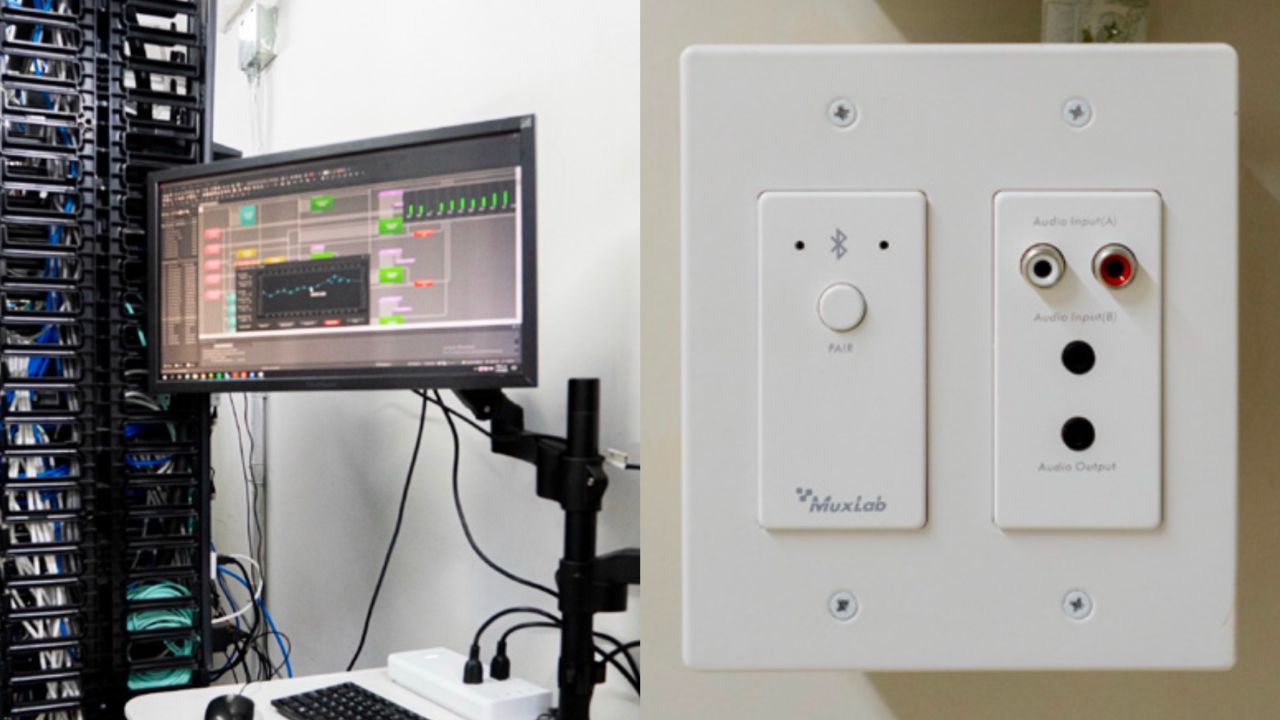
The implementation of MuxLab's Dante interfaces made it possible to organize signal distribution over IP infrastructure.
From a technical standpoint, this provides:
- Flexibility to route signals without physical rewiring.
- Scalability for future expansions.
- Greater control over latency and synchronization.
- Easy integration with DSP processors and network-based amplification.
In fitness settings where programming may change (new studios, hybrid classes, special events), a network-based architecture prevents costly redesigns in the medium term.
3. Uniform coverage and sound pressure control
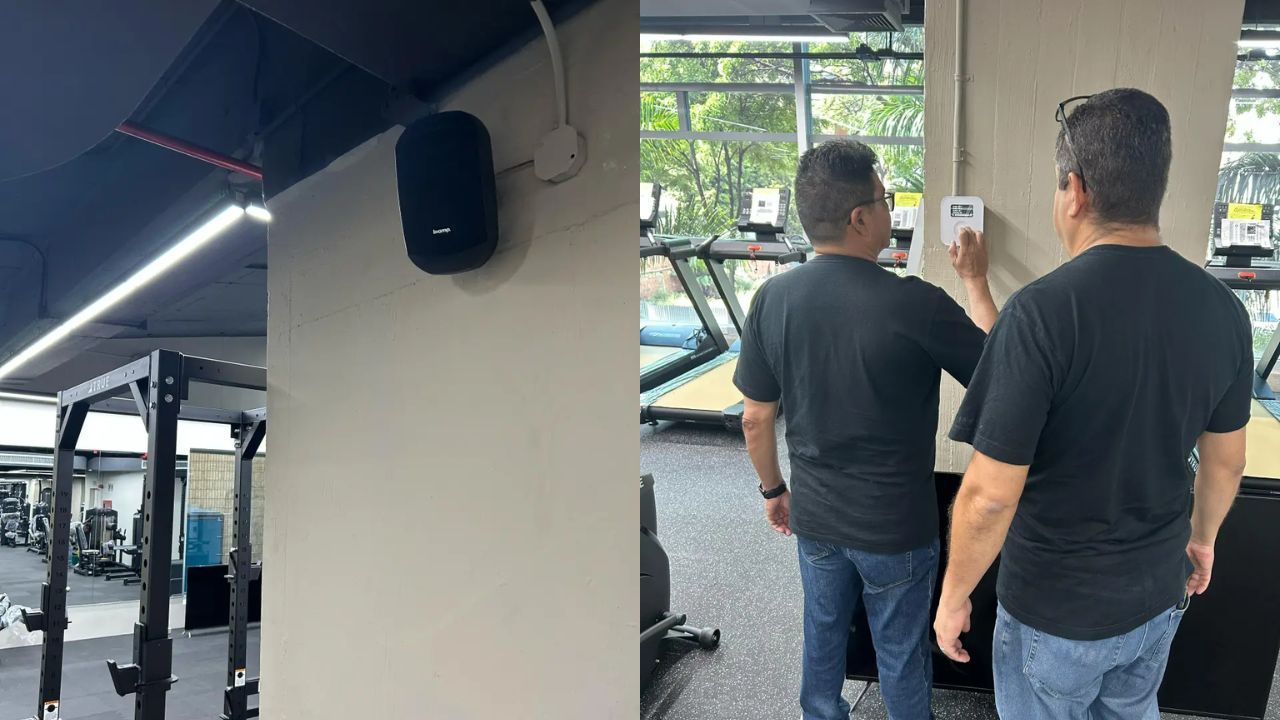
The use of BIAMP speakers and amplification made it possible to work with:
- Uniform coverage in open spaces.
- Hotspot Monitoring.
- Efficient power distribution based on the size of each room.
For spinning or functional training, where noise levels can be high, it is essential to design with not only power in mind, but also clarity and control over sound dispersion. Excessive SPL without proper definition affects both the experience and hearing health.
4. Speech intelligibility in noisy environments
In group classes, the instructor's voice is constantly competing with music and ambient noise. The integration of Sennheiser wireless microphones helped ensure:
- Vocal clarity even at high music volumes.
- Freedom of movement.
- Reduction of vocal fatigue in the instructor.
For system integrators, this underscores the importance of calculating the actual signal-to-noise ratio during operation, not just under ideal conditions.
5. User Experience: Ease of Use
A technically robust system loses its value if it is complex to operate. Each zone in Luxor has an independent control interface that allows you to:
- Select a font.
- Adjust the volume.
- Manage Bluetooth connectivity.
- Switch quickly between classes.
Reducing reliance on technical support improves operational continuity and reduces human error.
Here's a key point for integrators: the UX design of the control system is just as important as the audio engineering.
Trends for Integrators in the Fitness Industry
Based on this case, clear opportunities in the wellness market can be identified:
- Audio integration with dynamic lighting systems.
- Video for hybrid classes or streaming.
- Automation of scenes by training type.
- Remote system monitoring for preventive maintenance.
- Usage analytics by region.
Fitness centers are evolving into spaces that offer a complete sensory experience. This opens up an exciting field for integrators who know how to combine networked audio, centralized control, and scalability.
Next opportunity to learn more
For those interested in learning more about network-based AV connectivity solutions, MuxLab will be showcasing its technologies at InfoComm América Latina , where professionals can explore firsthand Dante applications, AV-over-IP extenders, and scalable architectures for commercial and corporate environments.
The fitness industry is just one of the many sectors where these solutions are making a difference. And trade shows like InfoComm América Latina to be the key gathering place for discussing how these technologies are being applied in real-world projects across the region.
Thanks to AVCOM for the images.