



8 Essential Tips for Proper LED Screen Installation
)
In the world of LED lighting, a successful installation doesn't begin on the day of installation. It starts with the proper project specification.
Proper installation directly impacts image quality, the equipment’s lifespan, and the end-user experience. Whether for retail, events, corporate settings, or digital signage, these are seven key aspects that cannot be overlooked.
1. The specification is everything
Before discussing specifications, it is important to analyze the environment, intended use, and the user experience you want to achieve. Whether the display is for indoor or outdoor use, viewing distance, brightness levels, and pixel pitch are all strategic decisions.
“At StudioLED, we begin advising our integrators at this stage. We advise and accompany our integrators on a site visit to assess the space, and in some cases, we create a rendering that allows the end client to see what the project will look like once completed,” says Miguel Trujillo, the company’s Business Development Manager.
2. Check the structure and mounting system
The alignment of the screen depends entirely on the proper construction and leveling of the structure. If the base does not meet the appropriate standards, the installation may be misaligned or even impossible.
Miguel adds that, as part of its work, the company also provides sets of blueprints and technical specifications that include front views, cross-sections, and assembly details, ensuring that the structure is perfectly aligned and prepared before installation. “This advance planning is key to avoiding last-minute adjustments on-site and ensuring precise, safe, and efficient execution. In addition, we always recommend working with certified structures and pre-calculated load capacities, ensuring stability and precision in both permanent and temporary installations.”
3. Technology backed by leading brands
Not all screens are created equal. The manufacturer's quality directly affects uniformity, durability, and performance.
“In our case, we work with a portfolio of globally recognized brands, which allows us to offer reliable solutions for retail, corporate settings, public spaces, stadiums, and more,” explains Trujillo.
4. Plan your power supply properly
LED displays require careful electrical planning to ensure stable operation. Accurately calculating power consumption, properly distributing loads, and using appropriate electrical protection is essential to prevent equipment failures or damage.
“It is important to always support system integrators by creating load diagrams for each project, providing technical data sheets, power consumption specifications, and electrical configuration recommendations that facilitate the proper implementation of the system starting from the project design phase,” explains the StudioLED executive.
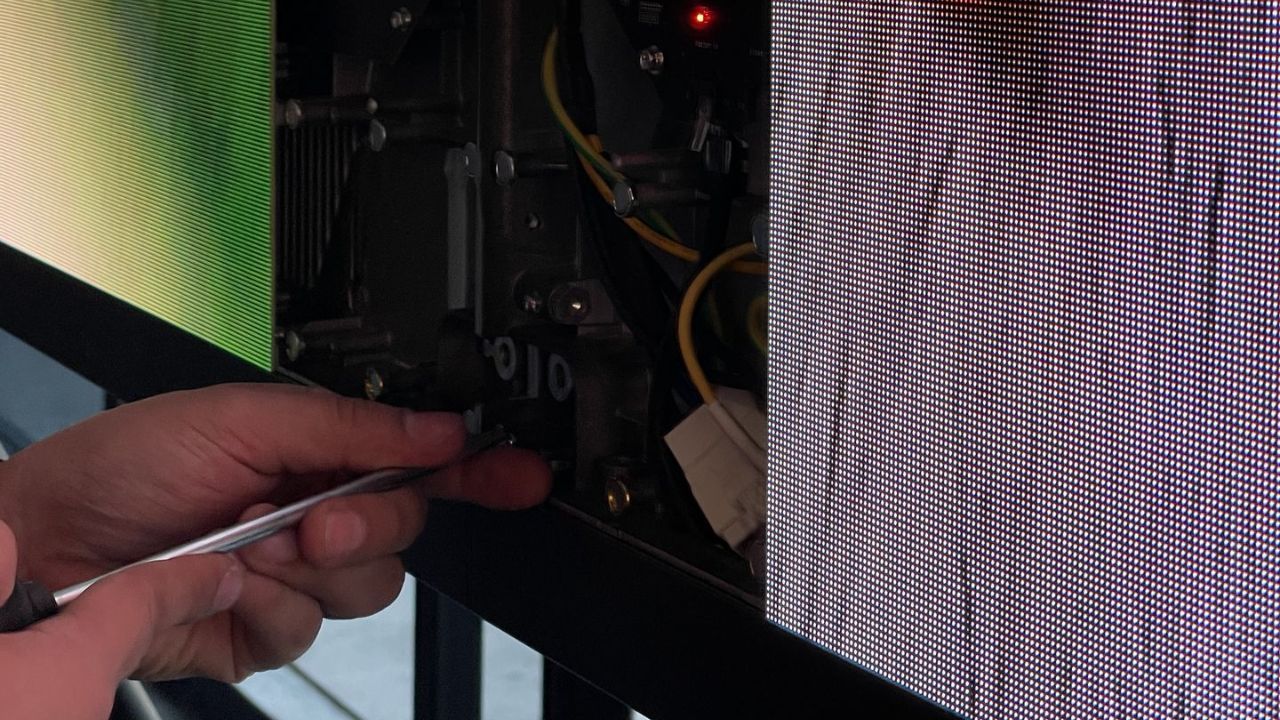
5. Proper monitoring and processing
The control system is the brain of an LED display. Components such as sending boxes, receiving cards, video processors, and control systems are responsible for distributing the signal correctly. Choosing the wrong controller or configuring it incorrectly can lead to problems such as signal delays, frame drops, or image inconsistencies.
"That is why it is essential to choose reliable control solutions that are compatible with the project’s display type and resolution. We work with industry-recognized control systems and provide technical support and guidance to ensure that every project has the right processing capabilities to meet its needs,” Miguel explained.
6. Don't neglect the wiring and signal
Wiring is a critical component of any LED installation. Both power cables and data cables must be installed in an organized and protected manner, using certified components.
Poorly managed cabling can cause interference, signal loss, or intermittent failures that directly affect image quality.
Drawing on its experience with numerous projects, StudioLED advises integrators and clients on best practices for signal distribution and proper cabling management, ensuring stable and reliable screen operation.
7. Perform proper calibration and image adjustment
Once the display is installed, it is essential to perform a calibration process to ensure uniformity in brightness, color, and contrast across the various modules. This adjustment ensures that the display appears as a single, continuous surface, preventing variations in hue or intensity that could affect the viewing experience.
Trujillo emphasizes: “We train and certify our installers to ensure that every screen delivers the best possible visual performance right from the start.”
8. Think about maintenance from the start
A well-planned installation should also take into account the system’s future maintenance. Defining appropriate access points, considering cabinets with front- or rear-access maintenance, and providing technical documentation facilitates service work and module replacement.
As part of its comprehensive approach, StudioLED backs its solutions with technical support, spare parts availability, and after-sales service, ensuring that every LED project maintains its performance over time.
Taking these factors into account from the outset helps prevent operational issues, optimize your investment, and ensure a visually striking experience.
StudioLED will be attending InfoComm América Latina they will share more technical recommendations and showcase solutions designed to drive high-end LED projects.
Sign up here, get our updates, and be the first to know when registration opens!